

With the energy sector looking to bolster its approach to safety, operators of workplaces are driving significant improvements in tackling dropped objects. The risks are now better understood, and knowledge of dropped objects prevention best practice is increasingly taking root.
Dropped object prevention is not yet ingrained across the board, however. Worksites are prone to dropped objects and may have differing levels of dropped objects training. HSE personnel and site managers need to be able to apply and incentivise common standards.
Ultimately, a mine site, an offshore rig, or any other workplace, must be equipped with the knowledge and the tools to minimise dropped objects risks and deliver a safer working environment, while reducing long-term expenditure.
WHAT IS THE FREQUENCY OF DROPPED OBJECTS INCIDENTS
A lack of consistent reporting is a serious issue and represents a key stumbling block for effective dropped objects prevention. Industries such as Oil & Gas do have established bodies such as DROPS to collect incident data. In other industries, however, there are no industry specific organizations and thus minimal reliable current statistics.
Incident reports may not even be shared between facilities of the same company, let alone among the wider industry, so it is key to ensure that companies have adequate measures and solutions in place to tackle dropped objects.
ANNUAL CASUALTIES FROM FALLING OBJECTS & EQUIPMENT IN THE US
- 238 FATALITIES
- 52,000 INJURIES
What are dropped objects?
A dropped objects incident occurs when an item falls from height, causing equipment damage, personnel injury or fatality. Dropped objects incidents fall into one of two categories: Static or Dynamic. Approximately 80% of dropped objects are Dynamic—the rest Static. Human error is a key factor leading to Dynamic Dropped Objects and an important consideration for those responsible for designing dropped objects prevention programmes.
DYNAMIC DROPPED OBJECTS
Objects falling due to applied external force, including those falling from conveyor belts, handheld items such as hammers dropped by personnel, moving equipment or materials being accidentally dropped when being lifted into place
STATIC DROPPED OBJECTS
Fixed objects that fall from height with no external force applied, such as lights or speakers breaking free from their attachment points due to vibration, corrosion, poor maintenance or being incorrectly installed.
WHAT ARE THE IMPACTS OF DROPPED OBJECTS
Dropped objects incidents present a fourfold threat to the safety of personnel, the integrity of equipment, the reputation of businesses, and their financial performance. Safety is, and should always be, the first priority for HSE personnel and site managers. As the diagram shows, however, the first three factors combine to create financial losses.
Personnel safety
The clearest and most commonly recognized impact of dropped objects is the threat to personnel, who may be struck by an object and suffer anything from a minor injury to long-term disability or even death. Behind every statistic is a person, with loved ones and family. Although equipment can be replaced, the duty of care to protect employees as much as possible is far more important.
Injuries to personnel also cost facilities financially through working days lost. Furthermore, there are potential financial compensation implications, incident reports and investigations both internal and by regulators. Also, as HSE professionals will be well aware, there are legal consequences that go hand-in-hand with injuries and fatalities.
THE DROPS CALCULATOR
Originally developed by the DROPS organization, the Drops Calculator is a widely recognized tool used by HSE and safety professionals across multiple industries to estimate the potential severity of a dropped object incident. By plotting the mass of an object against the distance it falls, the calculator provides a clear visual assessment of the potential consequences, ranging from a slight injury requiring first aid to a fatal impact. This tool serves as a stark reminder of the risks associated with working at height, helping site managers evaluate hazards and justify the implementation of robust dropped object prevention strategies.

Access our online Drops Calculator here
As the Dropped Objects Calculator shows, even relatively light objects can cause fatalities when dropped from height. For example, a 1.5kg wrench striking someone from 10m could present a high potential risk of death.
Equipment integrity
Dropped objects can also strike equipment, leading to loss of tools and causing damage to structures. If a dropped objects incident causes damage to important equipment, this incurs the cost of replacing damaged assets, but may also lead to a temporary suspension of operations, creating significant challenges and causing further financial losses.
Corporate reputation
While site or facility managers are rightly focused on the day-to-day task of protecting personnel and equipment, dropped objects incidents can have more far-reaching impacts on companies, particularly when negative attention is drawn towards the operator.
Press coverage is sometimes the only way of uncovering the details of a significant dropped objects incident. Part of the reluctance to issue comprehensive statistics and provide useful case studies relates to the reputational damage this could do to businesses. If severe dropped objects incidents are reported by national media, it reduces trust in the company involved and can affect future business prospects.
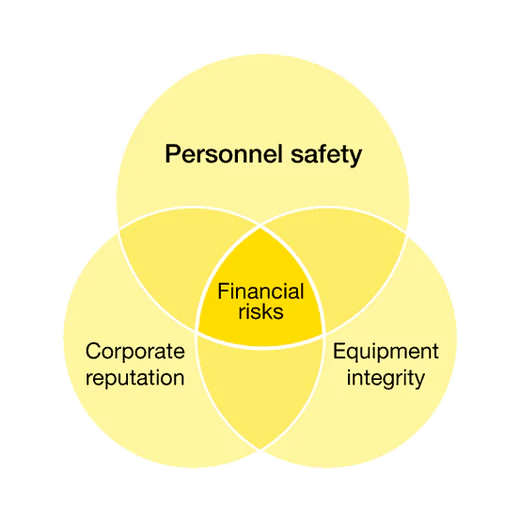
Financial risks
Financial impacts may be the least of concerns, but the above risks combine to impact the financial standing of a business in different ways—directly or indirectly. It is difficult to accurately assess the cost to businesses of individual dropped objects incidents, as operators are reticent to share this information.
When the costs identified above in terms of compensation claims, lost time incidents (LTIs), damaged tools and equipment are combined, the result can significantly affect the profitability of a site or facility. The disruption caused by an enforced inspection during a post-incident investigation can also be a drain on time and resources.
The paperwork and reporting process undertaken by HSE managers and operations managers is time spent away from productive work. Should scrutiny of procedures by inspectors lead to a citation, this could mean further reputational damage. The intangible costs to a business caused by this kind of reputational damage can exceed all other financial costs.
Ultimately, establishing a holistic approach to dropped objects prevention will give more control over dropped objects, their incident rates, prevention costs, and the reputation of their company.